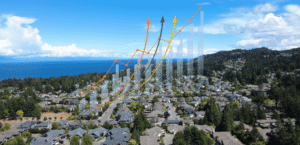
The drumbeat of natural disasters is growing louder across the United States, and the financial reverberations are undeniable. As climate change intensifies, so too does the frequency and severity of extreme weather events. In fact, projections indicate that U.S. insured losses from natural catastrophes could approach an alarming $145 billion in 2025, continuing a trend of 5-7% annual growth in real terms (Swiss Re, 2025). North America, largely driven by events in the U.S., accounted for almost 80% of global insured losses in 2024 (Swiss Re, 2025). Furthermore, forecasters predict an above-normal Atlantic hurricane season for 2025, with NOAA anticipating 13 to 19 named storms, including 6 to 10 hurricanes and 3 to 5 major hurricanes (NOAA, 2025). These escalating figures underscore a stark reality: natural disasters are not just an occasional threat, but a persistent and growing challenge for homeowners, communities, and critically, for the lenders holding the mortgages on affected properties.
In the face of this escalating risk, the aftermath of a disaster presents a unique and urgent challenge for lenders: how to quickly assess the damage to their collateral (the homes securing their loans) and mitigate the looming specter of widespread foreclosures. The answer lies in swift, targeted post-disaster inspections.
Why Speed and Precision Matter for Lenders
Imagine a scenario: a hurricane rips through a coastal region. Thousands of homes are potentially damaged. For lenders, attempting to inspect every single property in the entire FEMA-declared county is a logistical nightmare and a massive drain on resources. But not knowing the true condition of a property leaves them vulnerable to significant financial losses and an increased risk of loan defaults turning into foreclosures.
This is where fast, intelligent post-disaster inspections become a game-changer. By getting “eyes on the property” quickly and efficiently, lenders can:
- Accurately Assess Damage & Valuation: Knowing the true extent of property damage allows lenders to understand the current value of their collateral. This is crucial for making informed decisions about loan modifications, repair financing, or other loss mitigation strategies that can prevent a costly foreclosure.
- Expedite Insurance Claims & Repairs: Timely and comprehensive inspection reports provide the vital documentation needed to kickstart insurance claims. The faster a homeowner receives insurance payouts, the quicker repairs can begin, and the more likely they are to resume mortgage payments.
- Proactively Support Borrowers: Rapid inspections enable lenders to identify at-risk borrowers facing severe hardship. This early intervention allows for proactive outreach and the offering of tailored loss mitigation solutions like forbearance or loan modifications, keeping families in their homes and preventing defaults.
- Minimize Financial Loss and Regulatory Headaches: Avoiding foreclosures is a win-win. It saves lenders the significant legal and administrative costs associated with the process, and it helps maintain portfolio stability. Furthermore, quick action helps lenders meet critical regulatory requirements for post-disaster response.
Pinpointing Impacted Homes with Disaster Vision
In the chaotic aftermath of a natural disaster, knowing where to focus your inspection efforts is paramount. This is precisely where solutions like Disaster Vision and ValINSPECT Disaster prove invaluable.
Disaster Vision acts as a smart compass, guiding lenders to the properties most likely impacted by a natural disaster. Instead of broadly inspecting an entire county, Disaster Vision leverages sophisticated geospatial data, satellite imagery, and other crucial inputs to pinpoint a central disaster zone and its surrounding buffer. This goes beyond simple county-level declarations, offering precise insights at the individual property level. For lenders, this means:
- Strategic Prioritization: No more wasted resources on properties that weren’t truly affected. Disaster Vision helps prioritize inspections, ensuring that valuable resources are deployed where they’re needed most.
- Faster Response: By focusing on the highest-risk properties, lenders can initiate contact and inspection processes more quickly, leading to earlier interventions and better outcomes.
Deploying ValINSPECT Disaster Inspections
Once potentially impacted properties are identified, ValINSPECT Disaster provides the critical “eyes on the property” needed for a rapid and thorough assessment. What makes ValINSPECT Disaster particularly powerful is its flexibility:
- Swift On-Site Inspections: Experienced inspectors can be deployed to conduct exterior inspections, gathering crucial data and images of the property’s condition.
- Innovative Virtual Options: Recognizing that access can be challenging or delayed after a disaster, ValINSPECT Disaster offers a groundbreaking virtual inspection option. An onsite homeowner or other contact can virtually connect with an inspector via a mobile device, providing a real-time, live-streaming video walkthrough. This is an incredible tool for rapid initial assessments, even when physical access is difficult.
Together, Disaster Vision and ValINSPECT Disaster create a powerful synergy. Disaster Vision efficiently identifies the needle in the haystack – the truly impacted properties – while ValINSPECT Disaster swiftly gets detailed information about the property’s condition. This intelligent combination empowers lenders to respond to natural disasters with unprecedented speed and accuracy, protecting their assets, supporting their borrowers, and ultimately mitigating the widespread risk of foreclosures. In the face of nature’s fury, smart technology provides a crucial lifeline for both lenders and the communities they serve.
Ready to safeguard your portfolio and support your borrowers in the face of disaster? Contact Valligent today to learn more about how Disaster Vision and ValINSPECT Disaster can transform your post-disaster response strategy.